
Swing Like a Pendulum
A pendulum moves repeatedly from one side to another, making it a natural comparison for a swing.
Example:
The swing moved back and forth like a pendulum on an old clock.
This simile works especially well when you want to emphasize regular, repeated movement.
Swing Like a Bird in Flight
A swing can feel almost weightless when it rises high above the ground.
Example:
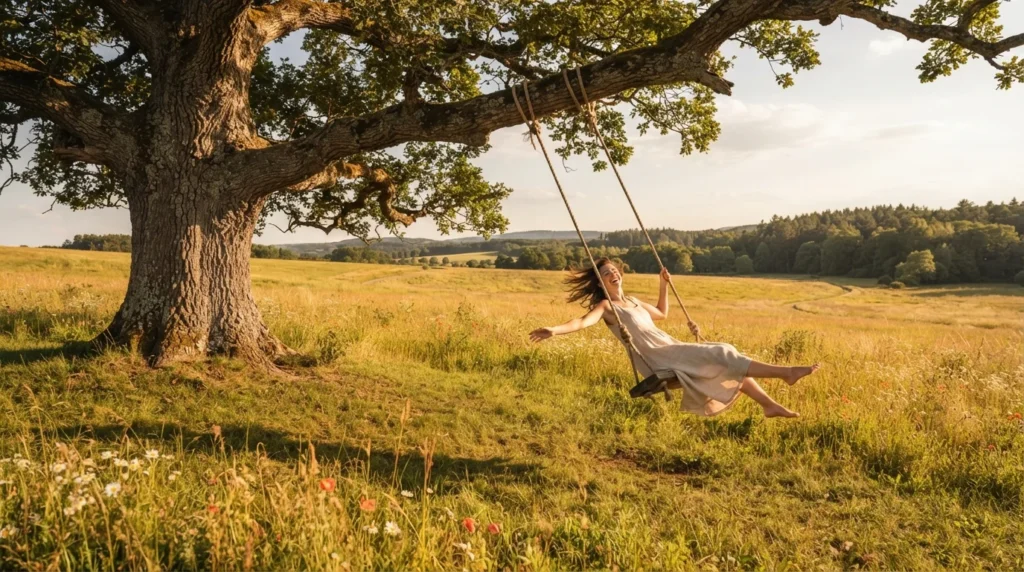
She soared on the swing like a bird gliding through the open sky.
This comparison creates a feeling of freedom and lightness.
Swing Like a Leaf in the Wind
A leaf moves gently and unpredictably when the wind catches it.
Example:
The empty swing swayed like a leaf dancing in the autumn wind.
This is useful for peaceful, gentle, or poetic descriptions.
Swing Like a Ship on Waves
A swing moves backward and forward in a way that resembles a boat rocking on water.
Example:
The old swing rocked like a small ship on restless waves.
This simile is particularly effective when the movement is strong or uneven.
Swing Like a Branch in the Breeze
Tree branches bend and sway whenever the wind passes through them.
Example:
The swing moved softly like a branch swaying in a warm breeze.
It gives the scene a calm and natural feeling.
Swing Like a Wave
Waves constantly rise and fall, creating a smooth rhythm.
Example:
The swing rose and fell like a wave rolling toward the shore.
This comparison works well for smooth and repetitive movement.
Swing Like a Dancer
A dancer moves with rhythm, balance, and grace.
Example:
The child moved on the swing like a dancer following a gentle melody.
This simile adds elegance and rhythm to your writing.
Swing Like a Kite
A kite moves through the air while being pulled by its string.
Example:
He swung high above the ground like a kite caught by a strong wind.
This comparison is ideal for energetic movement.
Swing Like a Metronome
A metronome moves from side to side at a steady pace.
Example:
The swing moved like a metronome keeping perfect time.
Use this when the movement is steady and predictable.
Swing Like a Door
A door swings between two positions, making it a simple and familiar comparison.
Example:
The gate swung like a door caught by the wind.
This works particularly well for objects rather than people.
Swing Like a Feather
A feather moves lightly through the air.
Example:
The empty seat swung like a feather drifting in the breeze.
This gives the movement a delicate and peaceful quality.
Swing Like a Hammock
A hammock gently rocks from one side to another.
Example:
The garden swing rocked like a hammock beneath a summer tree.
This comparison suggests relaxation and comfort.
Swing Like a Child Flying
A child on a high swing can feel as though they are flying.
Example:
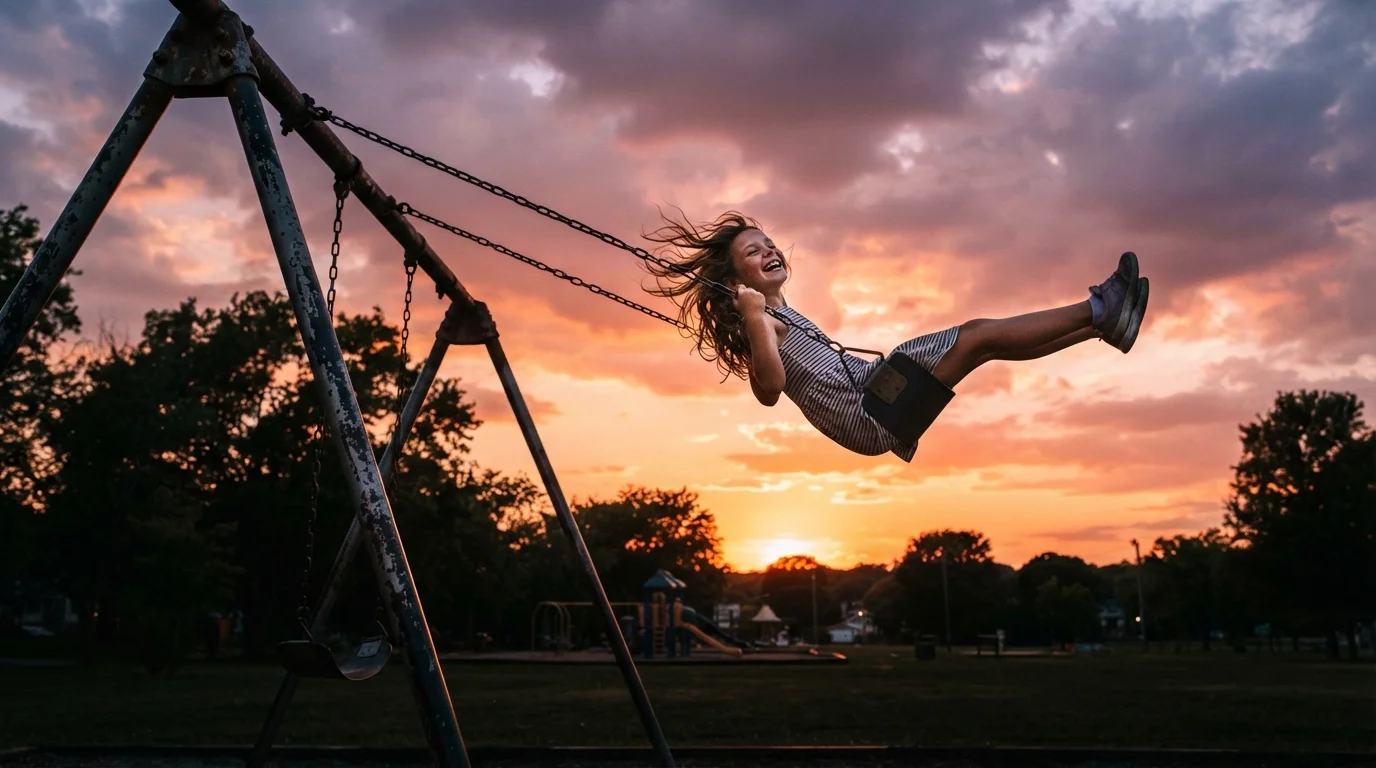
He swung toward the clouds like a child who had suddenly grown wings.
This is a strong choice for writing about excitement, freedom, and childhood.
Swing Like a Pendulum Between Two Extremes
Sometimes “swing” describes something that repeatedly changes from one extreme to another.
Example:
Public opinion swung like a pendulum between hope and disappointment.
This metaphorical use works well in essays, stories, and analytical writing.
Gentle Swing Similes
When the movement is slow and peaceful, try comparisons such as:
- Swing like a leaf in a soft breeze.
- Swing like a hammock on a quiet afternoon.
- Swing like a feather drifting through air.
- Swing like a calm boat on still water.
- Swing like a branch moving gently in spring.
- Swing like a lullaby carried by the wind.
Example:
The porch swing moved like a hammock floating on a lazy afternoon breeze.
Fast Swing Similes
For quick or energetic movement:
- Swing like a bird escaping into the sky.
- Swing like a kite caught in a gust.
- Swing like a pendulum racing through time.
- Swing like a wave during a storm.
- Swing like a door slammed by the wind.
Example:
The playground swing rushed forward like a kite pulled by a powerful gust.
Swinging High Similes
When someone swings high, you can emphasize height and freedom:
- Swing like a bird above the trees.
- Swing like a kite touching the clouds.
- Swing like a star rising into the night.
- Swing like a leaf lifted by a whirlwind.
- Swing like a child with wings.
Example:
She climbed higher and higher like a bird rising above the treetops.
Swinging Back and Forth Similes
For repeated movement from one side to another:
- Swing like a pendulum.
- Swing like a metronome.
- Swing like a boat on waves.
- Swing like a door in the wind.
- Swing like a branch in a storm.
- Swing like a wave moving toward shore.
Example:
The lantern swung like a pendulum ticking through the night.
Poetic Similes for Swing
For creative writing and poetry, consider these:
- Swing like a dream suspended between earth and sky.
- Swing like a feather caught by the wind.
- Swing like a moonbeam dancing through clouds.
- Swing like a bird chasing the horizon.
- Swing like a memory returning with every motion.
- Swing like a song carried from one moment to another.
Example:
The old swing moved like a memory gently returning with the evening breeze.
Funny Similes for Swing
For playful or humorous writing:
- Swing like a monkey on a jungle vine.
- Swing like a pendulum that forgot when to stop.
- Swing like a pancake flipping in a frying pan.
- Swing like a confused weather vane.
- Swing like a child who thinks the sky is a destination.
Example:
He swung like a monkey who had discovered the playground for the first time.
Similes for a Swing in a Playground
A playground swing often represents fun, childhood, and freedom.
| Description | Simile |
|---|---|
| Gentle movement | Like a leaf in the breeze |
| Fast movement | Like a kite in strong wind |
| High movement | Like a bird in flight |
| Repeated movement | Like a pendulum |
| Peaceful movement | Like a hammock rocking softly |
| Energetic movement | Like a dancer spinning to music |
| Unsteady movement | Like a boat on rough waves |
| Childhood feeling | Like flying without wings |
How to Choose the Right Simile for Swing
Think about what you want the reader to notice.
If the swing is gentle, use a leaf, feather, hammock, or branch.
If it is fast, compare it to a kite, bird, or strong wave.
If it moves regularly, a pendulum or metronome is a natural choice.
If you want to emphasize freedom, use a bird, kite, or something flying through the sky.
For poetic writing, comparisons with dreams, memories, moonlight, or wind can create a softer mood.
Common Mistakes When Using Swing Similes
Avoid choosing a comparison that does not match the movement. A peaceful swing should not normally be compared to a violent storm unless you intentionally want to create a sense of danger.
Also avoid repeating the same comparison throughout a paragraph. Mixing natural, mechanical, and imaginative comparisons can make your writing more interesting.
Most importantly, make sure the simile adds an image or emotion rather than simply repeating the meaning of “swing.”