
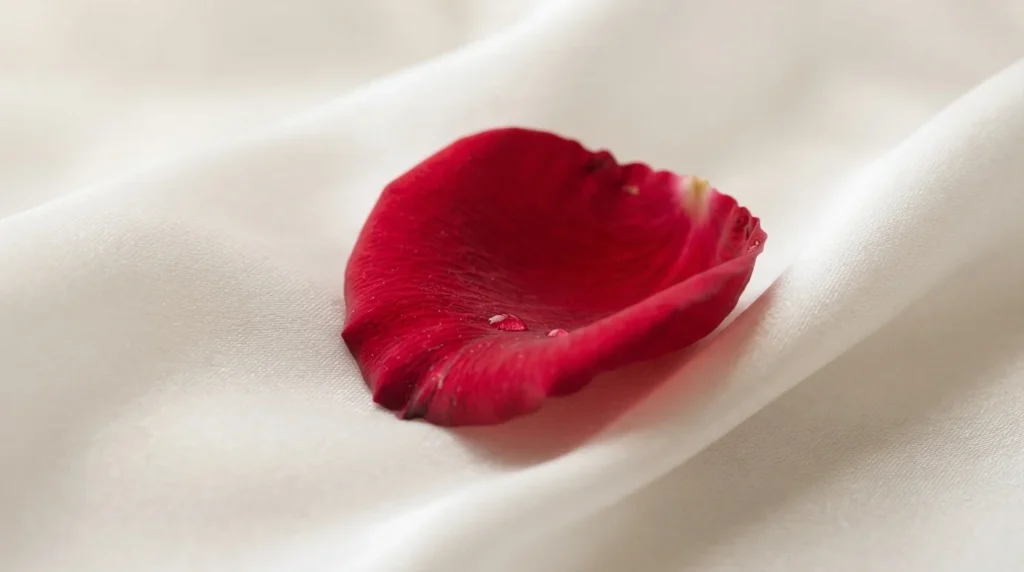

Blushing Like a Rose
A rose is one of the most natural comparisons for a flushed face.
Example:
Her cheeks turned red like roses blooming in the morning sun.
This simile works especially well in romantic or gentle descriptions.
Blushing Like a Sunset
Sunsets create beautiful shades of pink, red, orange, and purple.
Example:
His face began blushing like a sunset spreading across the evening sky.
This comparison gives the scene a soft and poetic feeling.
Blushing Like a Ripe Apple
A ripe red apple provides a simple and familiar image.
Example:
Her cheeks became red like ripe apples after everyone noticed her mistake.
This works particularly well when the blushing comes from embarrassment.
Blushing Like a Warm Ember
An ember glows with a deep reddish warmth.
Example:
His cheeks glowed like warm embers beneath the fading fire.
This simile suggests both color and heat.
Blushing Like a Strawberry
A strawberry can represent a bright, youthful shade of red or pink.
Example:
She was blushing like a strawberry beneath the summer sun.
This comparison has a playful and cheerful tone.
Blushing Like a Flower in Spring
Flowers opening in spring suggest freshness, beauty, and gentle color.
Example:
Her cheeks blossomed like flowers in spring when she heard the compliment.
This works beautifully in romantic and poetic writing.
Blushing Like the First Light of Dawn
The first light of morning can spread soft pink and red colors across the sky.
Example:
A faint blush appeared on her face like the first light of dawn.
This is a subtle and elegant comparison.
Blushing Like a Cherry
Cherries provide a vivid image of bright red color.
Example:
His cheeks were blushing like cherries under the afternoon sun.
This simile is particularly useful for youthful or playful descriptions.
Blushing Like a Pink Cloud
Soft clouds at sunrise or sunset can take on delicate pink shades.
Example:
Her cheeks turned pink like clouds glowing at sunset.
This gives the description a gentle, dreamy quality.
Blushing Like Fire Beneath Ash
A hidden fire can glow beneath a layer of ash, much like warmth showing through flushed skin.
Example:
His face reddened like fire glowing beneath a layer of ash.
This comparison works well for intense embarrassment or suppressed emotion.
Similes for Blushing From Embarrassment
When someone blushes because they feel embarrassed, choose comparisons that emphasize sudden heat and redness.
- Blushing like a red-hot ember.
- Blushing like a ripe tomato.
- Blushing like a flame suddenly catching fire.
- Blushing like a sunset appearing without warning.
- Blushing like a rose under bright sunlight.
Example:
She was blushing like a ripe tomato after realizing everyone had heard her comment.
Similes for Blushing From Shyness
Shy blushing is usually softer and more delicate.
- Blushing like a pale rose.
- Blushing like morning clouds.
- Blushing like flower petals.
- Blushing like the first glow of sunrise.
- Blushing like a quiet sunset.
Example:
She smiled shyly, her cheeks blushing like pale rose petals.
Similes for Blushing From Love
Romantic writing often uses flowers, sunsets, and warm light to describe blushing.
- Blushing like roses in sunlight.
- Blushing like a sunset over a quiet sea.
- Blushing like petals touched by morning light.
- Blushing like a candle glowing softly.
- Blushing like dawn spreading across the horizon.
Example:
She was blushing like a rose beneath the morning sun when he smiled at her.
Similes for Bright Red Blushing
For a strong flush, use comparisons with vivid colors and heat.
- Red like a ripe tomato.
- Red like a burning ember.
- Red like a summer sunset.
- Red like a bright cherry.
- Red like a glowing coal.
Example:
His cheeks became as red as glowing coals when the teacher called on him.
Similes for Soft Pink Blushing
For a subtle blush, softer comparisons are more effective.
- Pink like a rose petal.
- Pink like a morning cloud.
- Pink like dawn.
- Pink like a seashell.
- Pink like a delicate flower.
Example:
A soft blush spread across her cheeks like dawn over a quiet sky.
Blushing in Creative Writing
Blushing can reveal emotions without directly naming them. Instead of writing “she was embarrassed,” you can show the emotion through a vivid comparison.
For example:
Her cheeks bloomed like roses when she realized everyone was watching.
This tells readers that the character is embarrassed or shy while creating a stronger visual image.
Blushing can also suggest affection, excitement, nervousness, surprise, or warmth, so the surrounding context should make the intended emotion clear.
Choosing the Right Simile for Blushing
| Type of Blushing | Useful Comparison |
|---|---|
| Shy blush | Rose petals |
| Embarrassed blush | Ripe tomato |
| Romantic blush | Rose in sunlight |
| Gentle blush | Morning cloud |
| Bright red blush | Glowing ember |
| Warm blush | Summer sunset |
| Youthful blush | Strawberry |
| Subtle blush | Dawn |
| Dramatic blush | Burning coal |
| Poetic blush | Flower blooming |
Common Mistakes When Describing Blushing
Avoid using the same red comparison repeatedly. Blushing can range from a faint pink tint to a deep red flush, so the comparison should match the intensity.
Also, remember that blushing is not always caused by embarrassment. A character might blush because of shyness, affection, nervousness, excitement, heat, or attention.
The best simile should communicate both the appearance of the blush and the emotion behind it.